
Soil Health
Soil-first care, guided by biologyAt Deep Roots TX, we focus on what’s happening beneath the surface, where healthy plants and productive land depend on healthy soil and living systems working together over time. Across many landscapes—urban, agricultural, managed, and residential—we see the same pattern repeated: when soil function breaks down, surface treatments alone can only do so much.
Our work is rooted in a soil-first, biology-forward approach that prioritizes soil function, microbial life, and long-term resilience rather than short-term cosmetic fixes. By starting with soil, we help land perform better within its real-world constraints.
Beneath the surface
Soil is more than a growing medium. It is a living system that regulates water movement, nutrient availability, and the biological relationships that plants and crops rely on to thrive.
In many managed environments, soil function is compromised by compaction, disturbance, repeated chemical inputs, or changes in land use. These impacts are not always visible at the surface, but over time they shape how land responds to stress, rainfall, and use.
When soil biology is disrupted:
Roots struggle to access water and nutrients
Plants and crops become more dependent on external inputs
Systems grow less resilient and less efficient over time
A soil-first approach addresses these root-level limitations rather than chasing symptoms.
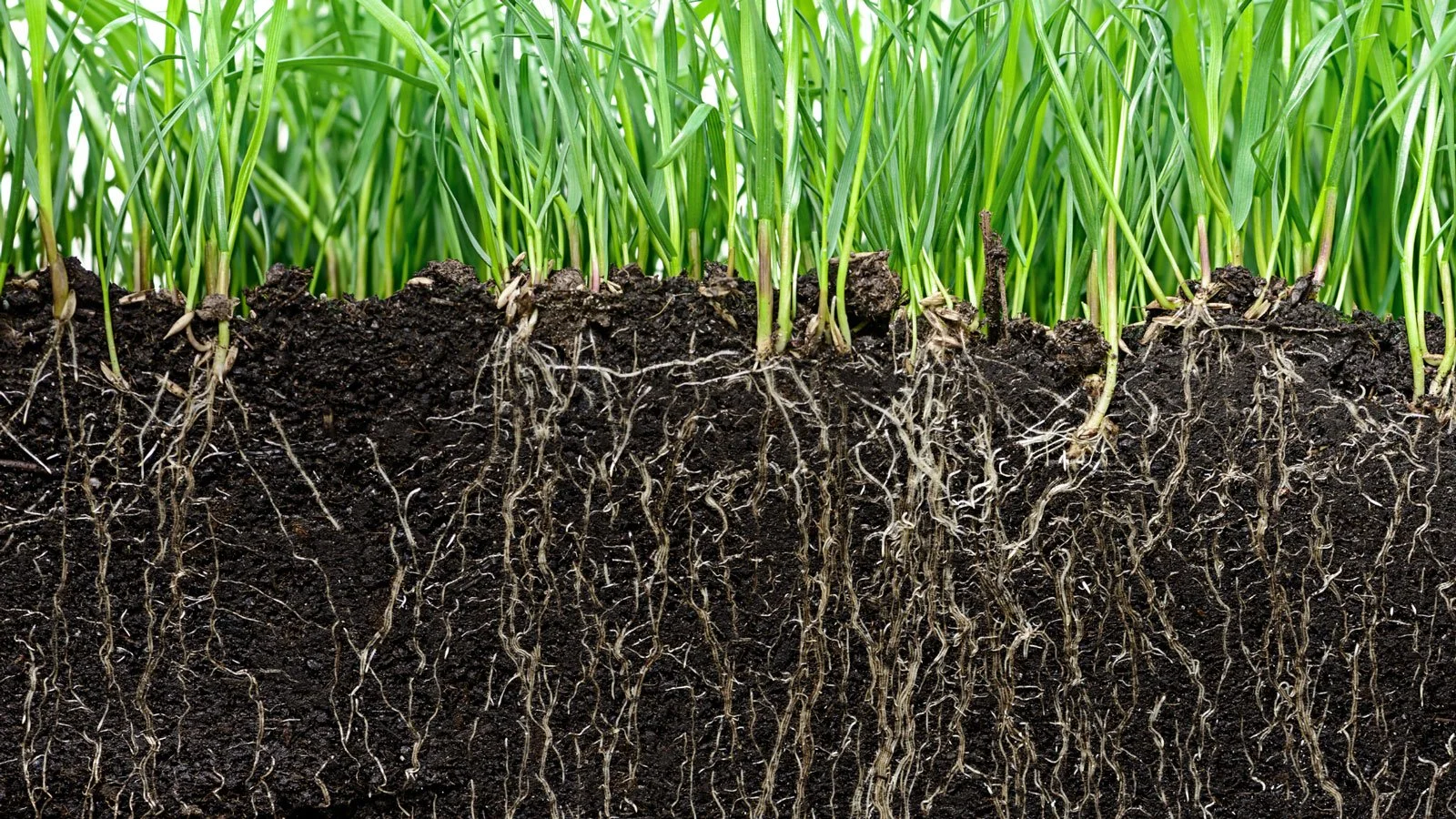
What a soil-first approach means
Putting soil first changes how decisions are made.
Rather than asking how to correct what’s visible above ground, we start by asking how the soil system is functioning and what may be limiting it. A soil-first approach emphasizes:
Supporting microbial life rather than suppressing it
Improving soil structure and aggregation instead of masking symptoms
Reducing reliance on synthetic fertilizers and harsh chemical inputs
Making decisions based on site conditions, land use, and long-term goals
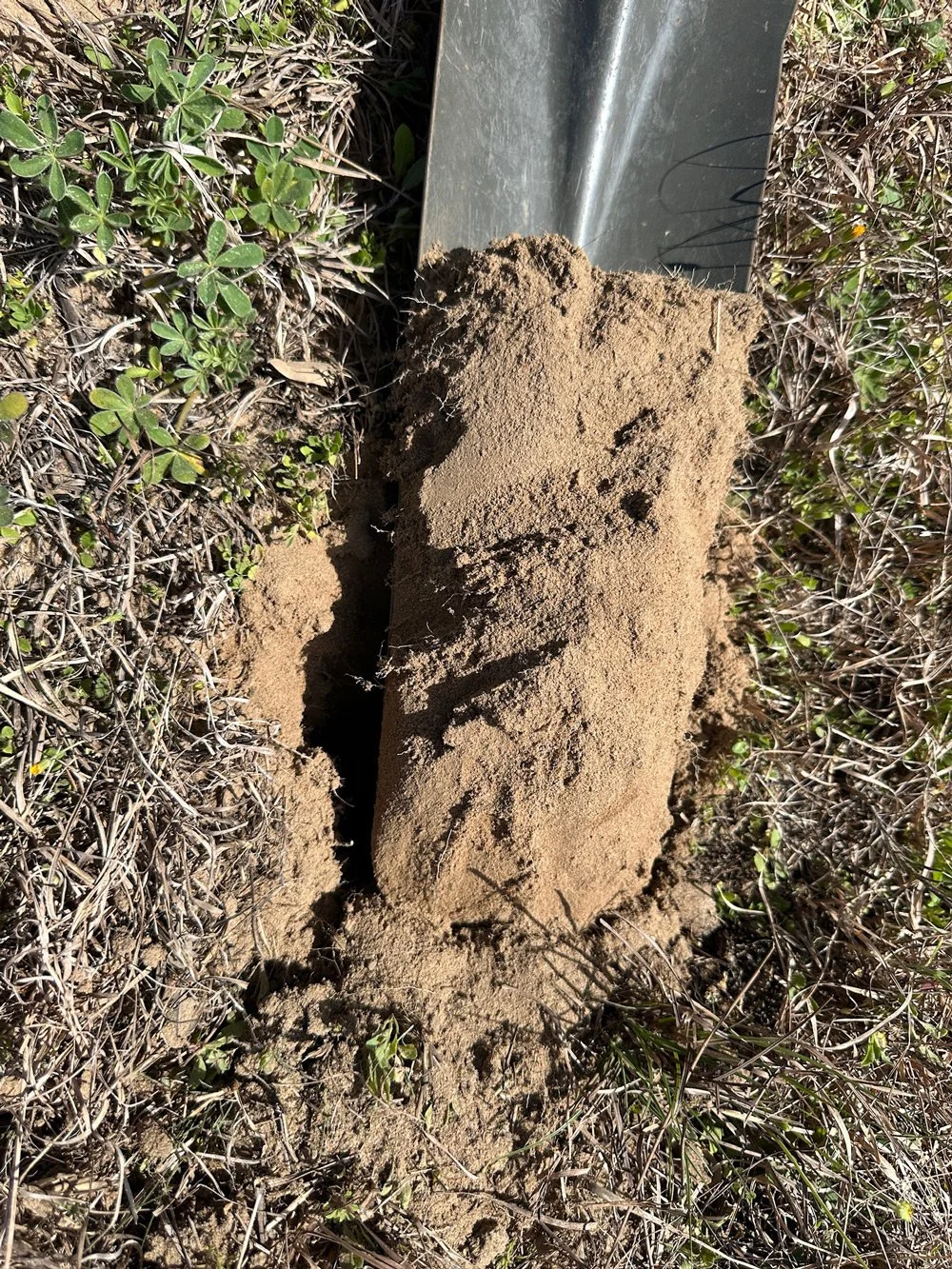
A biology-forward way of working
Healthy soil systems develop through biological processes, not force.
Our work centers on supporting those processes by introducing and encouraging beneficial microorganisms that drive nutrient cycling, root development, and soil structure. Rather than overriding natural systems, we focus on rebuilding the biological foundations that allow soil to respond more effectively to water, plant demand, and environmental stress.
This work is incremental and intentional. Soil function does not change overnight, and durable improvement happens through consistent support and observation over time.
What this looks like in practice
-
There is no single application that “fixes” soil. Many sites—especially those affected by construction, compaction, intensive use, or long-term disturbance—face ongoing challenges that require thoughtful, long-term stewardship.
We approach soil care as a process of supporting land as it functions within its constraints. Over time, this perspective can contribute to:
Improved root development and plant stability
Better water infiltration and soil structure
Reduced dependency on repeated corrective inputs
Systems that adapt more effectively to stress
This mindset applies whether the goal is recovery, resilience, or simply making better choices about how land is managed moving forward.
-
Our approach is informed by soil health science, field experience, and ongoing observation. We pay attention to how soils respond, adjust when conditions change, and prioritize methods that are safe, practical, and effective in real-world settings.
We believe that careful observation and restraint are as important as intervention. Supporting soil function means working with biological systems, not rushing them.
-
Our work does not happen in isolation. We are grateful to operate alongside others who are deeply committed to soil health and who share knowledge, insight, and collaboration within this field.
We’re especially thankful for collaborators whose work continues to inform our thinking, including Farm Dirt, whose compost-based systems shape much of our biological approach, and Rhizos LLC, whose soil testing and biological insight deepen our understanding of living soils.
These relationships reflect a broader community of practitioners and researchers working toward healthier soil systems through collaboration rather than competition.
Looking ahead
Soil-first care is not about perfection. It is about attention, patience, and working with systems as they exist. We believe thoughtful soil care is foundational to healthier land—at any scale.
Want to explore further?
If you’d like to learn more about how this thinking is applied in practice, you may find it helpful to explore The Way We Work or Our Approach.
And for those interested in going deeper into soil biology, regenerative practices, and land stewardship, we’ve gathered a short list of books, articles, and conversations that have influenced our thinking on our Resources page.
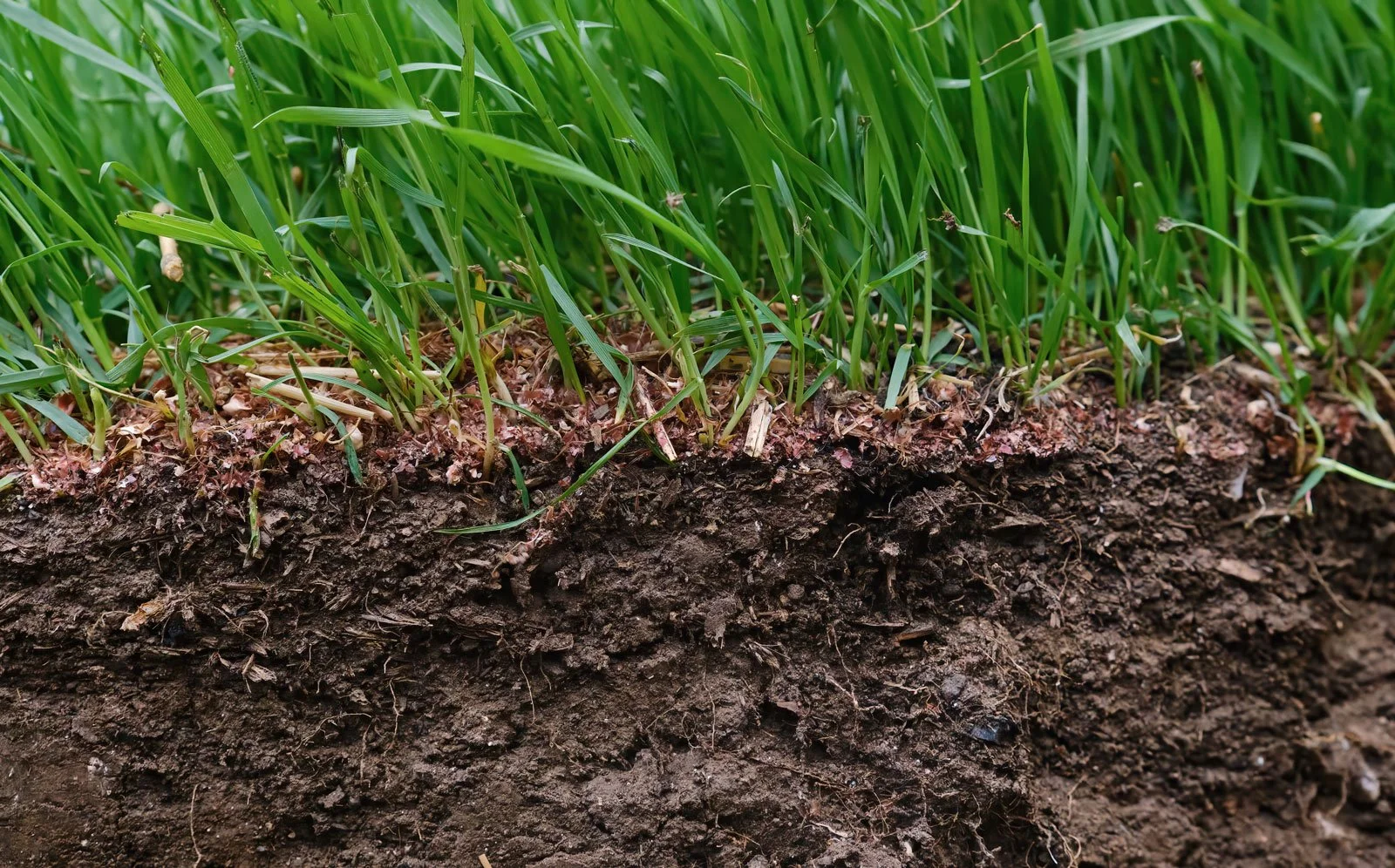
Healthy Soil Starts Here
Curious whether soil-first care is a good fit for your property? We’re happy to talk through your questions and help you consider next steps.